
YouTube Shorts now pulls in over 90 billion daily views, and that number keeps climbing. But most creators and brands posting Shorts are still guessing. They film something, upload it, and hope the algorithm picks it up. That's not a strategy. If you want results that actually compound, you need to follow YouTube Shorts best practices rooted in data, not trends that expire in a week. The gap between accounts that grow and accounts that stall almost always comes down to repeatable systems over random creativity.
At SocialRevver, we build short-form content engines for founders, creators, and business owners who don't have time to guess. Our Attention Engine™ analyzes over 750,000 videos to identify what actually drives performance, from hook structure to pacing to distribution timing. We've seen firsthand what separates Shorts that get buried from Shorts that generate real authority and inbound leads.
This guide breaks down 10 practices that are working right now in 2026. Each one is something you can apply immediately, whether you're producing Shorts yourself or running them through a managed system. No filler, no vague platitudes, just the specific moves that get your Shorts in front of the right audience, consistently.
1. Use a managed Shorts system when you need scale
If you're a founder or business owner, manually producing Shorts every week will eventually compete with your core work. A managed system takes the production burden off your plate and replaces random output with a repeatable, data-driven process. That's the core idea behind treating Shorts like infrastructure rather than a creative side project you fit in between meetings.
What it means and when it makes sense
A managed Shorts system means someone else handles strategy, scripting, editing, and distribution while you focus on running your business. It makes sense when you're posting inconsistently, when quality is slipping because of time constraints, or when the content strategy is clearly broken but you don't have the bandwidth to fix it yourself.
How SocialRevver fits into a Shorts workflow
SocialRevver runs your entire Shorts production through the Attention Engine™, which analyzes over 750,000 videos to surface high-performance patterns before a single frame gets filmed. The system covers scripting, editing, distribution timing, and conversion funnels, giving you a complete content pipeline without requiring you to manage every step.
When you remove yourself as the creative bottleneck, you produce consistently. Consistency is what the algorithm rewards.
What you still need to provide as the creator
Even inside a fully managed system, your voice, expertise, and direct perspective are irreplaceable inputs. You need to provide clear positioning, feedback on script drafts, and on-camera presence when the content requires a human face. A managed system amplifies what you bring to the table; it does not replace your authority or substitute for real subject-matter knowledge.
Mistakes to avoid when outsourcing Shorts
Outsourcing goes wrong when you hand over creative direction without clear brand guidelines or approve scripts you haven't actually read. The biggest mistake is expecting a managed service to fix a weak offer or unclear positioning before the content even starts. No production quality can compensate for a message that doesn't resonate.
How to evaluate results without chasing vanity metrics
Following youtube shorts best practices only matters if you measure the right outcomes. Skip follower counts and focus on watch time, profile visits, and inbound lead quality. These signals tell you whether your Shorts are building authority with the right audience, not just collecting impressions from people who will never convert.
2. Hook in the first 2 seconds
The first two seconds of your Short determine whether someone watches or scrolls past. YouTube's algorithm tracks early retention closely, and if viewers leave immediately, the platform stops pushing your content to new audiences. One of the most important youtube shorts best practices is treating those first frames as your highest-leverage creative decision in the entire video.
Hook types that work in 2026
The strongest hooks create immediate tension or curiosity. These four formats consistently outperform generic openings:
- Bold claim: "Most founders waste their first 10,000 followers."
- Provocative question: "Why does nobody talk about this?"
- Visual contrast: Show the result before explaining the process.
- Direct address: Speak straight to a specific person's exact problem.
How to write hooks for your niche
Your hook needs to target a specific pain point or desire your audience already carries. Generic hooks bleed viewers fast. Write five hook variations for every Short and pick the one that creates the strongest open loop without giving away the payoff too early.
On-screen text and visuals that stop the scroll
Pair your spoken hook with a bold text overlay that reinforces or teases the core idea. Keep it to five words or fewer. High-contrast text on a visually clear background reads faster on mobile and keeps attention locked in those critical early seconds.
The visual hook and audio hook should work together, not compete with each other.
Mistakes that kill early retention
- Starting with "Hey guys, welcome back"
- Setting context or backstory before delivering any value
- Weak or cluttered visuals in frame one
Quick hook templates
- "Here's what [audience] gets wrong about [topic]."
- "Stop doing [X] if you want [Y]."
- "I [achieved result] in [timeframe]. Here's exactly how."
3. Write for retention, not views
Views get your Short seen once. Retention keeps people watching and tells YouTube to push your content further. Chasing impressions without understanding watch behavior will plateau your growth fast.
The retention-first structure for Shorts
Build every Short around a clear promise in the hook and a satisfying delivery at the close. Lead with the payoff concept, then work backward through the supporting details. This structure keeps viewers anchored to the outcome from the first second onward.
A simple retention-first structure: hook, tension, payoff, close.
How to use open loops and payoff timing
An open loop plants a question the viewer needs resolved. Delay the answer just long enough to build tension without losing patience. Keep pacing tight between points so there is no dead air.
The best Shorts feel complete but still leave the viewer wanting more from your channel.
How to keep one clear idea per Short
One video, one idea. Spreading multiple messages across a Short kills retention mid-way through. Pick your single strongest point and cut everything else before you film.
Keep the concept small enough to explain fully in under 60 seconds.
Mistakes that cause early drop-offs
- Unnecessary context before delivering value
- Burying the main point past the halfway mark
- Switching topics without clear transitions
Retention benchmarks to watch in analytics
Following youtube shorts best practices means tracking average percentage viewed directly inside YouTube Studio. Watch your drop-off timestamps to find exactly where viewers leave and fix those moments in your next script.
4. Shoot native 9:16 and fill the frame
Shooting in the correct format is one of the most overlooked youtube shorts best practices. When you film natively in vertical rather than cropping horizontal footage, you send YouTube a clear signal that your content belongs in the Shorts feed, which directly affects how the algorithm distributes it.
The exact specs Shorts favors
YouTube requires 1080x1920 pixels at a 9:16 aspect ratio for Shorts. Stick to these specs to avoid automatic compression that softens your image and flags your content as non-native:
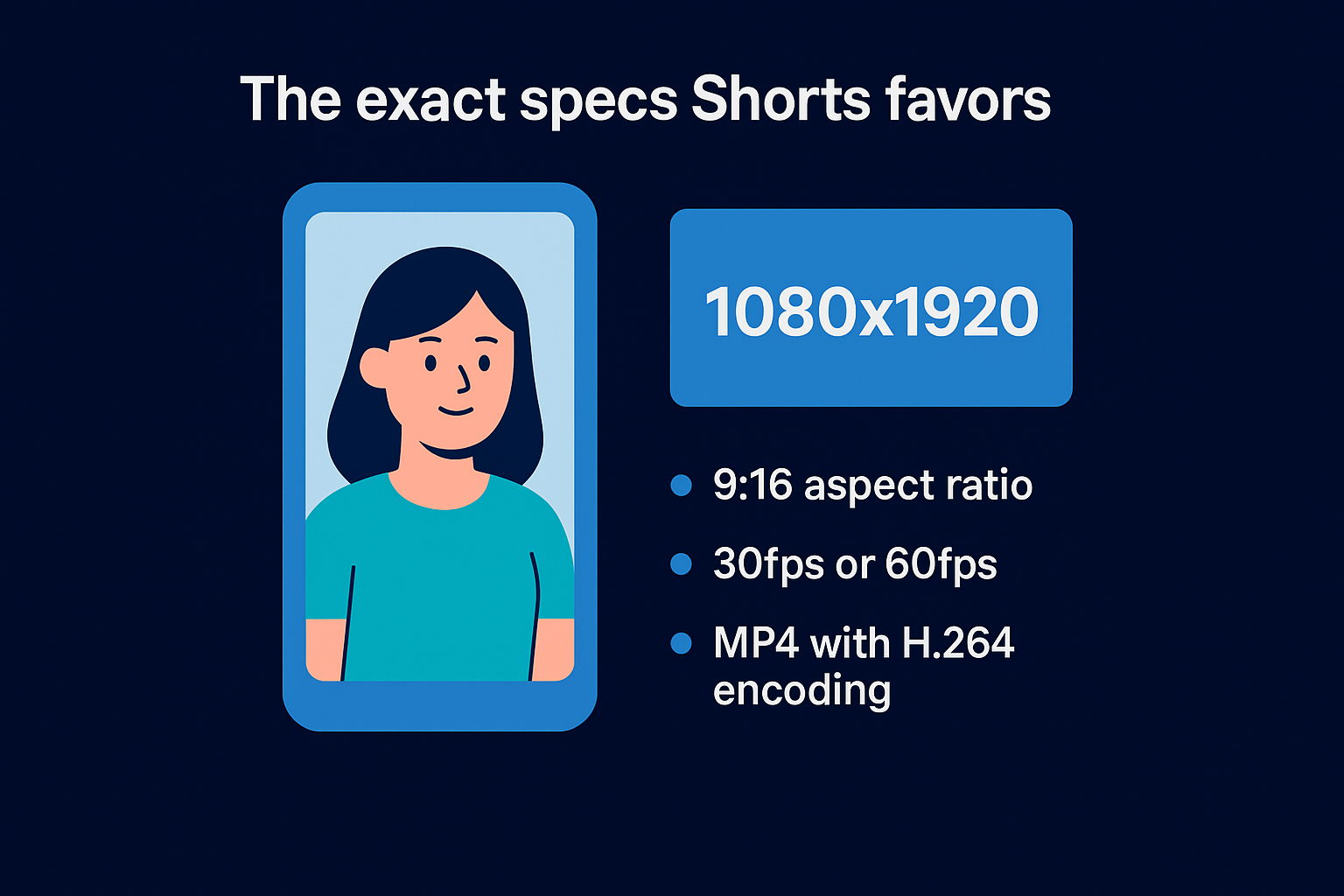
- Frame rate: 30fps or 60fps
- Bitrate: 8 Mbps minimum for clean mobile playback
- File format: MP4 with H.264 encoding
Framing rules that keep attention on mobile
Position your subject in the upper two-thirds of the frame so on-screen text and interface elements do not cover faces or key visuals. Tight framing reads far stronger on a small screen than wide shots that bleed detail.
Dead space around your subject is wasted attention. Fill the frame with something that earns the viewer's focus.
Visual clarity tips for faces, products, and demos
Sharp focus on the primary subject is non-negotiable. For product demos, shoot close enough that details are legible without zooming in post. Keep backgrounds clean and uncluttered so nothing competes with your core message.
Mistakes that make Shorts feel recycled
Repurposing horizontal video with black bars or blurred background fills signals low effort to both viewers and the platform. Never upload letterboxed content to the Shorts feed, and avoid vertical crops from wide footage that cut off key visual information.
A simple pre-shoot checklist to include
Run through this before every session:
- Camera set to 9:16 before recording starts
- Subject fills at least 60% of the frame
- Background clear of visual clutter
- Test shot reviewed on a phone screen before the full take
5. Prioritize clean audio and lighting
Bad audio ends a Short faster than weak content. Viewers tolerate imperfect visuals, but distorted, muffled, or echo-heavy sound triggers an immediate scroll. Following youtube shorts best practices means treating audio quality as a non-negotiable production floor, not an upgrade you add later.
The minimum gear that makes a big difference
You do not need a studio setup to produce clean, professional-sounding Shorts. A clip-on lavalier microphone running directly into your phone eliminates most ambient noise, and a basic ring light solves 80% of lighting problems in a single, affordable purchase.
Audio rules for voice-first Shorts
Record in the smallest, softest room you have access to. Hard walls and bare floors create reverb that budget microphones cannot filter out. Keep your microphone within 12 inches of your mouth and speak at a consistent volume throughout the take.
Viewers forgive shaky camera work far more readily than they forgive audio that forces them to strain.
Lighting setups that work in offices and homes
Position your key light slightly above eye level at roughly 45 degrees to your face. Avoid overhead lighting as your only source, since it casts harsh shadows under your eyes and chin that read poorly on small mobile screens. A window with natural diffused light works just as well when you face it directly.
Common production mistakes and fixes
Catching these early saves you a wasted take:
- Recording near HVAC vents adds constant background hiss; move to a quieter corner before starting
- Mixing room light with screen glow creates uneven color temperature; match your light sources
Quality checks before you upload
Play back every take through headphones before you start editing. Catching clipping, echo, and background noise at the source saves more time than fixing avoidable audio problems inside your editing software.
6. Use captions and on-screen text on purpose
Captions and on-screen text are not decorations. They are functional tools that directly affect how long someone stays in your Short. Research from Google shows that 85% of social video is watched without sound, which means your text has to carry the full message on its own when audio fails to reach your viewer.
When to use subtitles vs. headline text
Subtitles transcribe your spoken words for silent viewers and accessibility. Headline text, on the other hand, punctuates key moments with a bold visual emphasis that drives the core idea home. Use both, but keep them in separate visual lanes so they do not compete for the same space on screen.
How to pace text to match edits and beats
Time each text element to appear exactly when the word is spoken or the cut lands. Text that lingers after the audio has moved on creates visual drag that pulls viewers out of the rhythm of your Short.
Your text pacing and your edit pacing should feel like one decision, not two separate ones.
Accessibility and comprehension best practices
Caption every Short by default. Viewers with hearing differences watch Shorts on the same feed as everyone else, and clean captions expand your reach without extra effort.
Mistakes that overwhelm the viewer
Avoid stacking subtitles, headline text, and graphic elements in the same frame zone. Too many competing text layers split attention and make your Short look cluttered on a small mobile screen.
Caption styling rules for readability on phones
Use high-contrast colors with a subtle outline or shadow behind each word. Keep font size large enough to read without zooming, and avoid thin serif typefaces that lose legibility at mobile resolution.
7. Edit for pace with pattern interrupts
Editing is where retention either holds or breaks. Even a well-scripted Short loses viewers when the edit drags, and pattern interrupts are the specific technique that keeps attention locked across the full duration of your video.
What pattern interrupts are and why they work
A pattern interrupt is any sudden visual or audio change that resets the viewer's attention before it drifts. Your brain is wired to notice novelty, so breaking the visual rhythm every few seconds keeps viewers anchored to the screen instead of scrolling away.
The edit is not just about removing dead air; it actively manufactures reasons to keep watching.
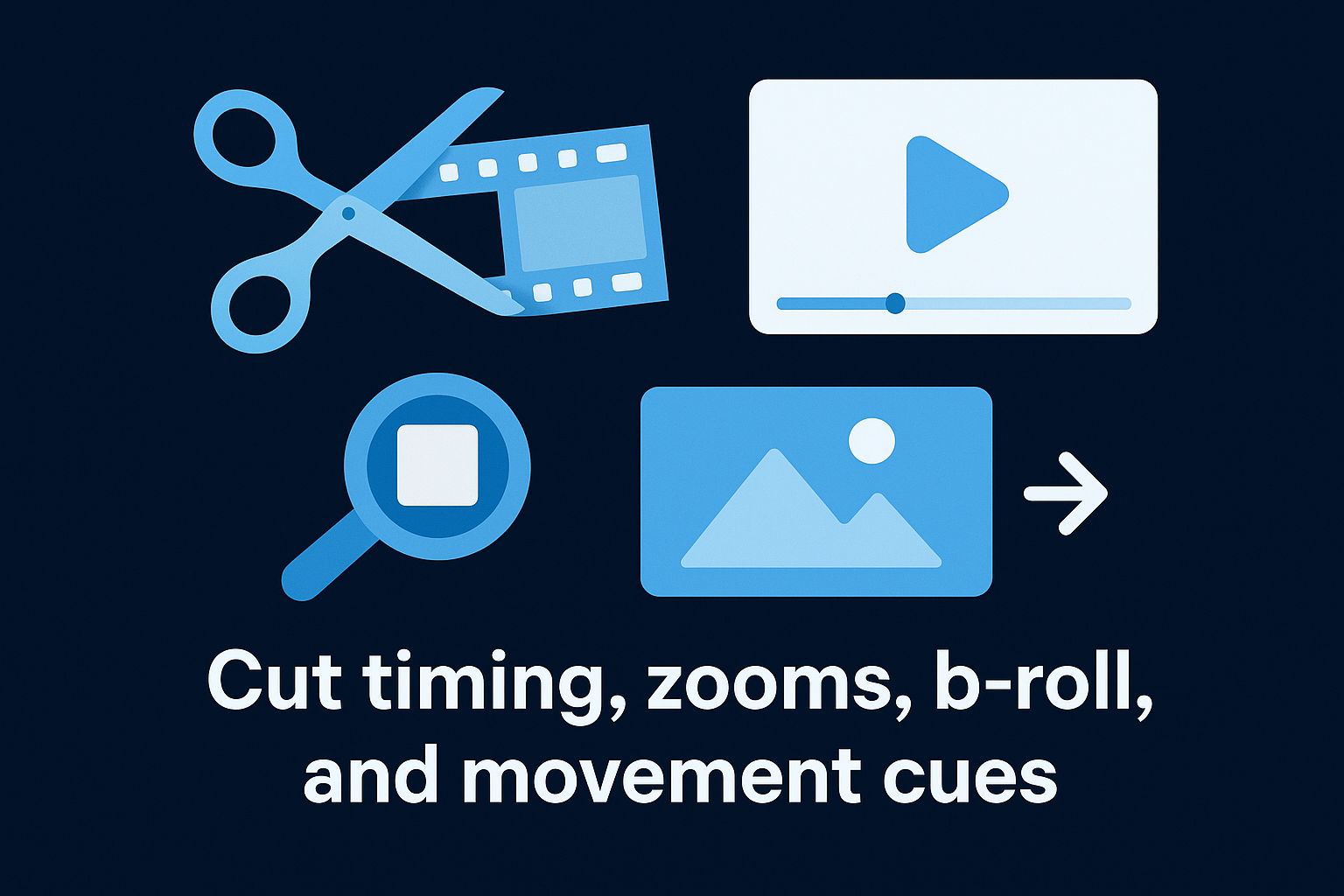
Cut timing, zooms, b-roll, and movement cues
Cut on action or on emphasis, never on dead air between sentences. A push-in zoom on a key phrase, a quick b-roll insert, or a subtle camera angle shift every three to five seconds maintains visual momentum without making the edit feel frantic.
Sound design basics for Shorts
Add subtle audio cues like whooshes, risers, or impact hits to match visual cuts and reinforce key moments. Sound design does not need to be complex; even a single layered effect per major cut lifts the perceived production quality significantly.
Mistakes that make edits feel chaotic
Avoid stacking too many transitions inside a single Short. Random cuts with no rhythmic logic confuse viewers rather than engage them, and that confusion reads as low quality regardless of how strong the script is.
A repeatable pacing formula for editors
Following youtube shorts best practices means building a consistent editing rhythm: hook cut, supporting point, pattern interrupt, payoff close. Run this structure on every Short to keep output predictable and performance stable across your entire catalog.
8. Match length to your idea and test
Short-form content does not have a fixed ideal length. The right duration depends entirely on your idea, and one of the most important youtube shorts best practices is treating length as a variable to test rather than a default you never question.
What changed with longer Shorts and what stayed true
YouTube expanded Shorts to three minutes, but viewer behavior did not shift alongside that change. Attention still drops the moment value runs thin, regardless of what the platform permits. Longer only works when the idea genuinely requires the time.
How to choose between 15, 30, 60, and 180 seconds
Match your format to your content type:
- 15 seconds: Single tips, reactions, or bold claims with no setup required
- 30 seconds: Two-step explanations or quick before-and-after formats
- 60 seconds: Multi-point breakdowns that follow a clear structure
- 180 seconds: Deep walkthroughs where every second earns its place with new information
How to build a strong ending that earns rewatches
Your final three seconds need to deliver the payoff cleanly and leave the viewer satisfied. A strong close drives rewatches, which signals value to the algorithm and directly extends your reach.
A Short that ends with clarity earns the rewatch. A Short that fades out just loses the viewer permanently.
Mistakes that stretch a weak idea
Padding thin content with filler sentences to hit a longer runtime destroys retention. Cut ruthlessly and let the idea set the duration, not the other way around.
A testing plan for length experiments
Run the same core concept at two different lengths in back-to-back weeks. Compare average view duration, not total views, to identify which format holds your specific audience longer and build from that data point forward.
9. Optimize title, description, and hashtags
Metadata shapes how YouTube categorizes your Short and who the algorithm serves it to. Treating your title, description, and hashtags as afterthoughts leaves free distribution on the table, and fixing them takes less than five minutes per upload.
How Shorts discovery works across feed and search
YouTube surfaces Shorts through two channels: the algorithmic feed and keyword-based search. Feed discovery relies on engagement signals, but search discovery depends heavily on clear, specific metadata that matches what your target viewer actually types.
Title patterns that earn clicks without clickbait
Your title should name the specific value the viewer gets, not tease a mystery with nothing behind it. These formats consistently outperform vague titles while staying true to youtube shorts best practices:
- "How to [result] without [common obstacle]"
- "[Number] things [specific audience] should know about [topic]"
What to put in the description in 2026
Write two to three sentences that expand on the title's core idea without repeating it word for word. Include your primary keyword in the first sentence, then add a related secondary term in the second to capture adjacent search intent.
Your description is an indexing tool, not a summary. Write it for the algorithm to read and the viewer to skim.
Hashtag rules and how many to use
Use three to five targeted hashtags per Short. Focus on specific topic tags rather than broad ones, and always include the Shorts tag to ensure proper feed classification.
Metadata mistakes that limit reach
Copying the same title and description across multiple Shorts trains YouTube to treat your content as duplicate. Write unique metadata for every upload so each Short competes independently across both search and feed distribution.
10. Post consistently and build series
Consistency signals channel reliability to YouTube's algorithm and tells your audience you're worth following. One-off viral swings rarely compound into sustained growth; a steady posting rhythm does.
How to pick a sustainable posting cadence
Start with three Shorts per week and hold that pace before adding volume. Picking a cadence you can maintain for 90 days without burning out matters far more than posting daily for two weeks and then going silent.
Why series beat one-off viral swings
A series gives viewers a clear reason to return because they already know what comes next. Each episode carries the audience forward instead of making them decide from scratch whether your next video is worth their time.
Consistency compounds. A series that runs for 30 episodes builds more authority than 30 unrelated Shorts spread across the same period.
How to batch scripts, filming, and edits
Batching scripts in one session, filming in another, and editing in a third separates the creative modes that drain different mental energy. This structure lets you produce a full week of content in a single day without losing quality toward the end of the session.
Mistakes that break momentum
Skipping uploads to wait for the perfect idea destroys the consistency signal you built with the algorithm. Posting an average Short on schedule outperforms a perfect Short that arrives three weeks late.
How to plan a 30-day Shorts calendar
Map out four series topics and assign two to three episodes per topic across the month. Following youtube shorts best practices means treating your calendar as a production commitment, not a loose intention you revisit each Sunday.
Next steps
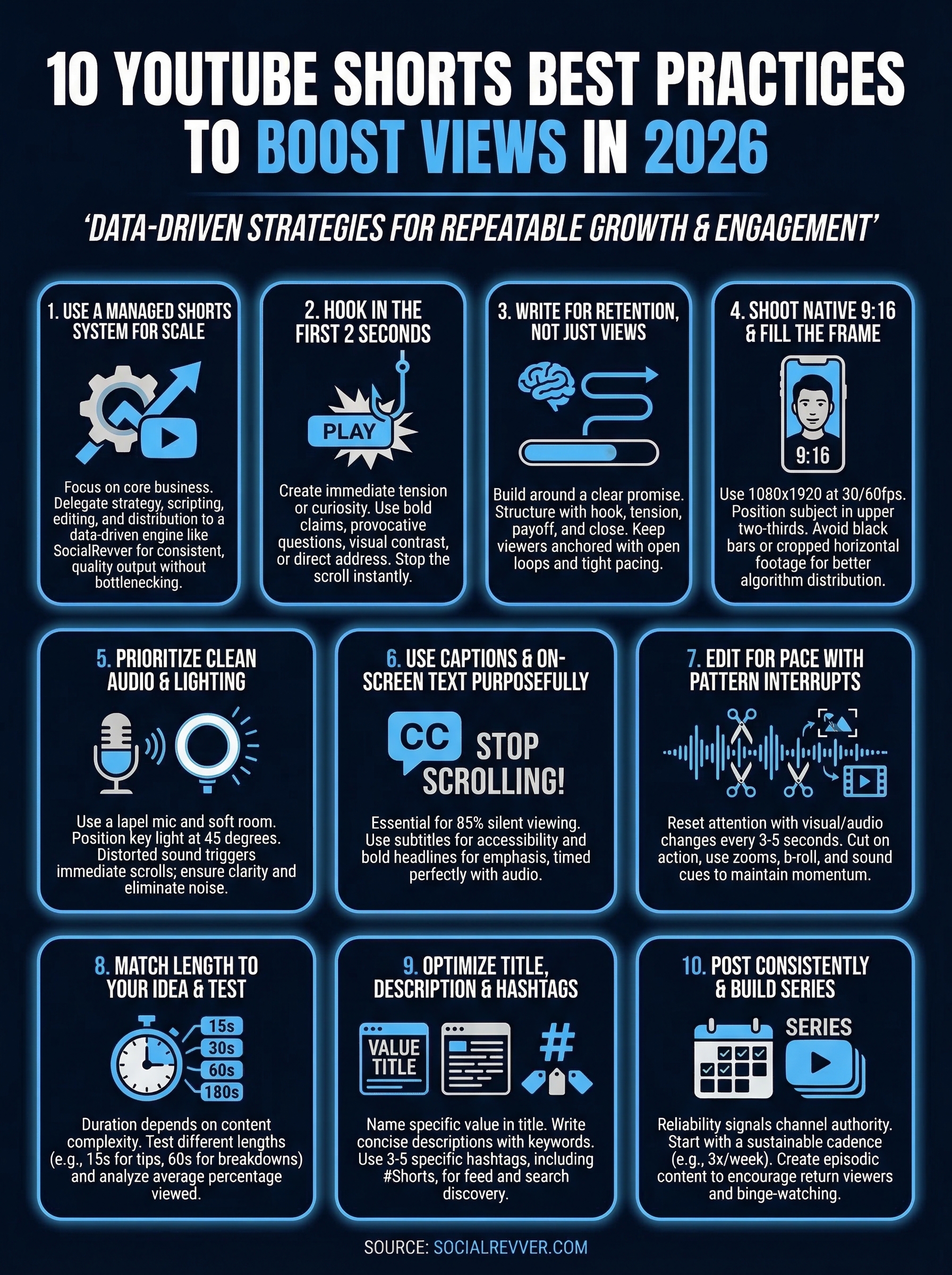
Every youtube shorts best practices principle in this guide works, but only if you actually apply them consistently. You now have a clear framework covering hooks, retention, production quality, metadata, and posting cadence. The difference between accounts that grow and accounts that stall is not knowledge. It is execution across enough weeks to let the algorithm respond.
Start with the practices that fix your biggest current weakness. If your hooks are weak, rewrite them before you change anything else. If your posting cadence is broken, build a 30-day calendar this week. Fix one layer at a time and measure the results before adding complexity.
If you want a team to build and run this entire system for you, SocialRevver handles everything from strategy to distribution. Apply to work with our team and get a free 40-slide social media strategy to see exactly what a managed Shorts engine looks like for your brand.