Brands running influencer campaigns at scale need more than a spreadsheet and a few DMs. That's where a dedicated platform comes in. The GRIN influencer marketing platform has positioned itself as one of the leading solutions for managing creator relationships, tracking content performance, and tying influencer activity back to actual revenue. But whether it's the right fit for your brand depends on several factors that aren't always obvious from a sales demo.
At SocialRevver, we build and operate content systems that turn organic attention into revenue for founders, creators, and business owners. Influencer marketing platforms like GRIN sit in a closely related space, they're tools for managing the creator side of your content strategy. We've spent enough time inside data-driven content operations to know what matters when evaluating a platform like this, and what's just noise.
This article breaks down GRIN's core features, pricing structure, real user reviews, and how it stacks up against competitors. By the end, you'll have a clear picture of what GRIN actually delivers and whether it aligns with the way your brand operates.
What GRIN is and who it's for
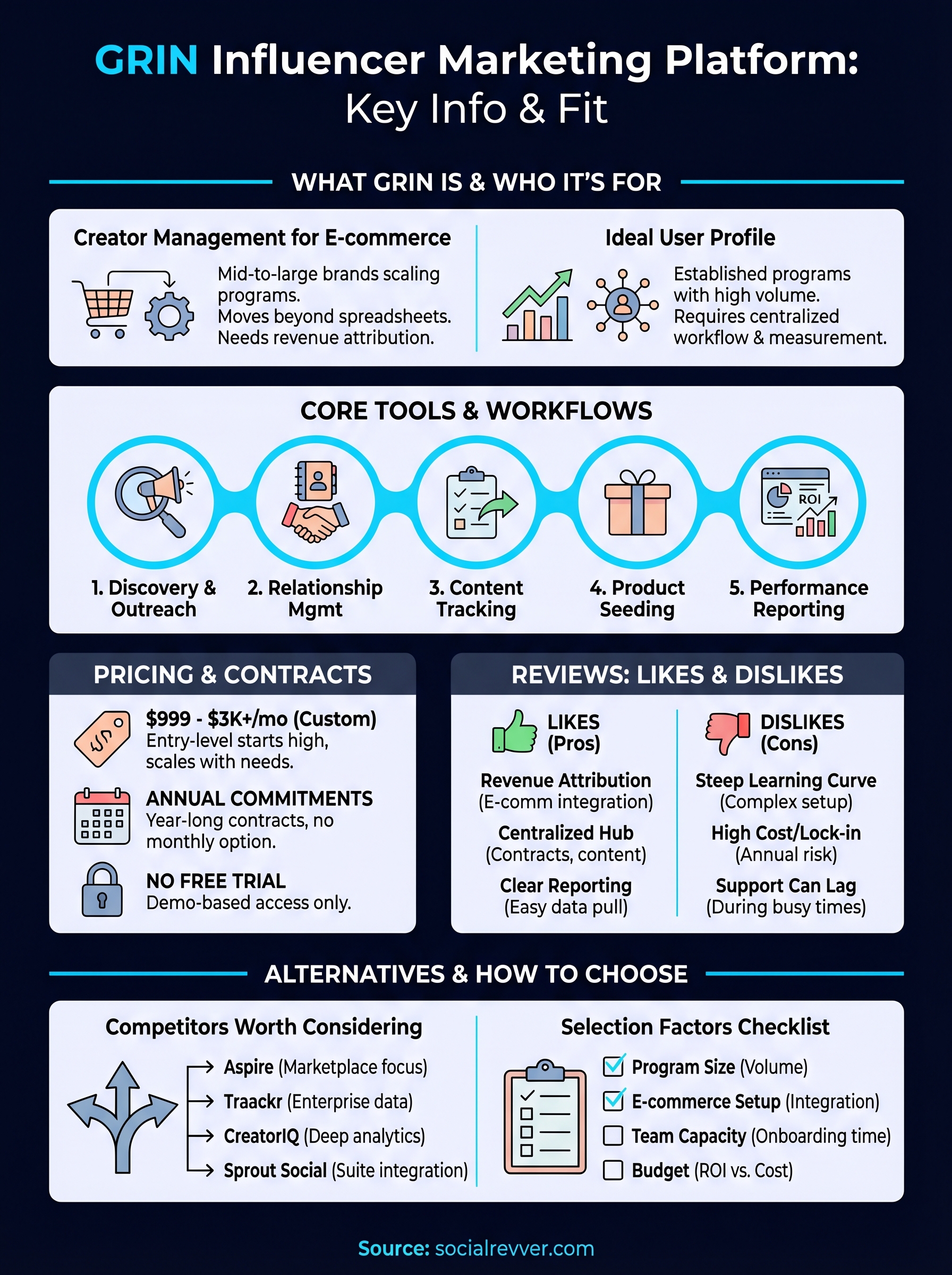
GRIN is a creator management platform built specifically for e-commerce brands that run influencer programs at scale. Unlike general marketing tools that bolt on influencer features as an afterthought, GRIN was designed from the ground up to handle the full lifecycle of a creator relationship, from discovery and outreach to contract management, content approval, and ROI reporting. The platform integrates directly with Shopify, WooCommerce, and other major e-commerce systems, which means it can track when an influencer's content drives an actual purchase rather than just a click or a view.
Who GRIN is built for
The grin influencer marketing platform is not a tool for brands just testing the influencer channel with a handful of one-off posts. It targets mid-to-large e-commerce brands that already have an influencer program running and need real infrastructure to manage it without hiring a bloated internal team to handle all the manual coordination work. If you're currently managing creator relationships through a mix of email threads, Google Sheets, and shared Dropbox folders, you're exactly the kind of operator GRIN is designed for.
If your brand is juggling dozens of creator relationships and losing track of content deadlines, contracts, and payment statuses, GRIN addresses that specific operational breakdown directly.
The typical GRIN customer is a direct-to-consumer brand in categories like fashion, fitness, beauty, or consumer tech that wants to treat influencer marketing as a serious, measurable acquisition channel. These are companies where the marketing team is lean but the creator roster is large, and that gap between headcount and workload creates real operational risk. You need a system that handles the administrative load so your team can focus on strategy and relationships rather than chasing down deliverables.
Where GRIN fits in a content strategy
GRIN sits at the management and measurement layer of influencer marketing. It doesn't replace your creative direction or help you develop a content strategy from scratch. What it does is give you a centralized operating system to recruit creators, manage all communications in one place, track deliverables against timelines, and measure the revenue impact of each campaign with direct e-commerce data.
This distinction matters more than most brands initially realize. If you're still figuring out what type of content resonates with your audience or which creator profile actually drives conversions for your product category, a platform like GRIN won't solve that foundational problem. You need a proven content strategy before a management platform adds meaningful value. Once that foundation exists, GRIN helps you scale what's working without campaigns falling apart under their own weight.
Brands that extract the most value from GRIN use it to systematize a playbook that already converts, not to discover one from scratch.
Core tools and workflows in GRIN
The grin influencer marketing platform organizes its feature set around five core areas: creator discovery, relationship management, content tracking, product seeding, and performance reporting. Each module connects to the others, so your team is never jumping between tools to get a complete picture of where a campaign stands.
Creator discovery and outreach
GRIN gives you access to a large creator database where you can filter by audience demographics, engagement rates, platform, follower count, and content category. Beyond the database, the platform also includes a feature that lets creators apply directly to your program through a branded landing page, which reduces the time your team spends on cold outreach. When you find a creator you want to work with, GRIN centralizes all communication, contract management, and product shipment tracking inside a single creator profile so nothing gets lost across inboxes.
The combination of inbound applications and outbound search means you're not dependent on one sourcing method, which matters at scale.
Content approval and campaign workflows
Once a creator is onboarded, GRIN handles the content review and approval process inside the platform. Creators can submit their content for review before posting, your team can request revisions, and once approved, the content gets logged against the campaign's deliverable list automatically. This eliminates the back-and-forth email chains that tend to create missed deadlines and miscommunications. The platform also lets you set campaign briefs with clear timelines and requirements, which creators access directly through their own portal.
Revenue attribution and reporting
GRIN connects to your e-commerce store to track revenue generated from each creator's unique links and discount codes. You can see which creators are driving actual purchases, not just impressions, and which campaigns deliver a positive return on spend. The reporting dashboard pulls this data together in a format that makes it straightforward to present results internally and make budget decisions based on real performance numbers rather than estimates.
Pricing and contract expectations
GRIN does not publish its pricing publicly. To get a number, you need to request a demo and go through a sales conversation. That approach alone tells you something about who the platform is built for: brands with a real budget allocated to influencer infrastructure, not teams testing the water with a few hundred dollars a month.
What GRIN's pricing actually looks like
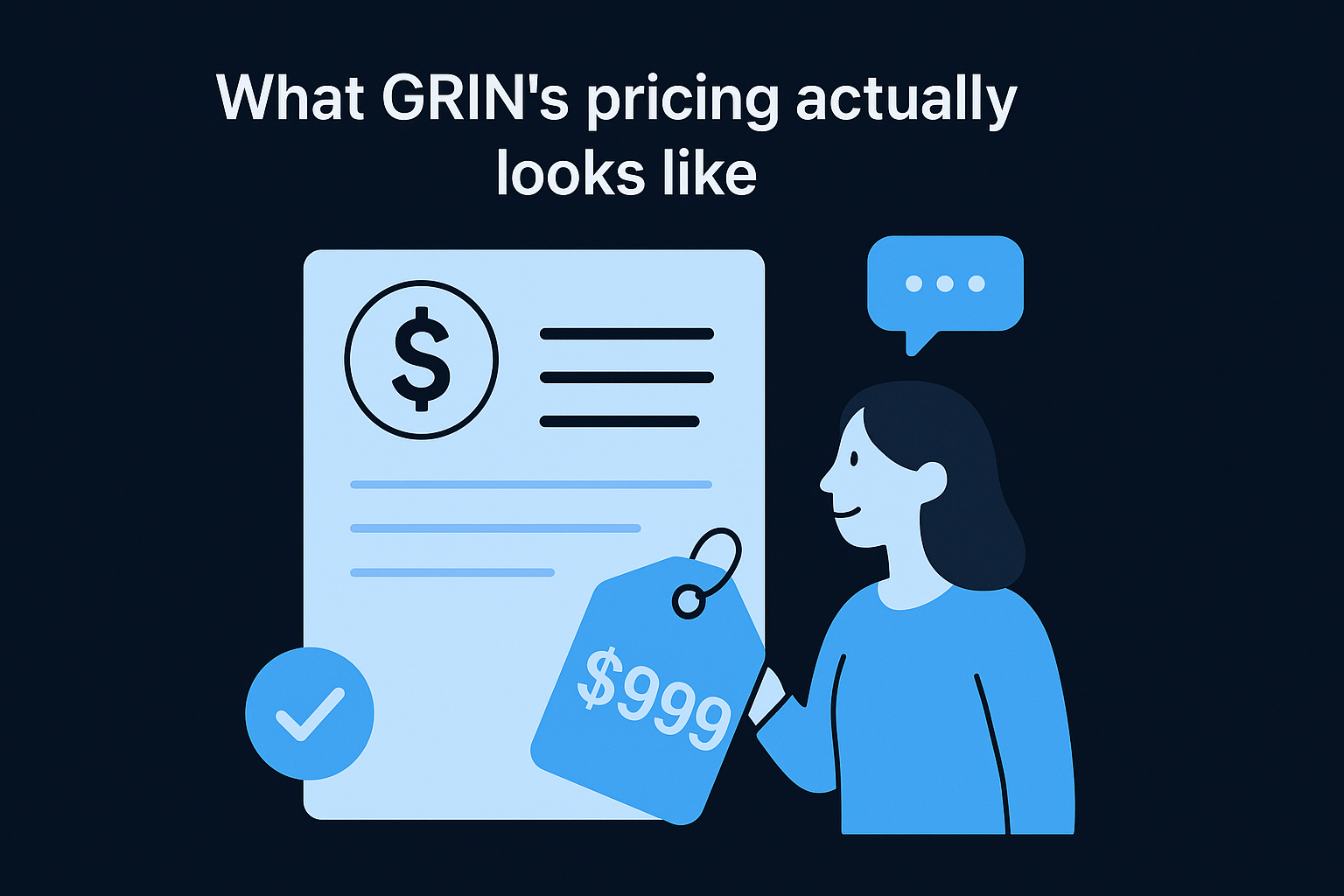
The grin influencer marketing platform uses custom pricing based on your brand's size, creator roster, and specific feature needs. Based on widely reported user feedback, entry-level access typically starts around $999 per month, with most mid-size brands landing somewhere between $1,500 and $3,000 per month depending on the scope of their program. Larger enterprise accounts with extensive creator networks pay more. GRIN does not offer a free trial, and there is no self-serve option that lets you explore the platform before committing to a paid plan.
If you're evaluating GRIN seriously, go into the demo with a clear picture of your creator volume, monthly campaign output, and e-commerce platform so the quote you receive reflects your actual use case.
Annual contracts and commitment length
GRIN structures its agreements as annual contracts, which means you're making a year-long commitment when you sign. This is standard for platforms at this level, but it's worth understanding before you enter negotiations. Month-to-month flexibility is generally not available, and if your influencer program shrinks or your strategy shifts mid-year, you're still locked into the full term.
Before signing, make sure you have a clear understanding of what's included in your tier versus what costs extra. Features like additional user seats, expanded e-commerce integrations, or dedicated support sometimes sit outside the base package. Ask specifically about those line items during the sales process so there are no surprises after you're already committed to the annual agreement.
What users like and dislike about GRIN
Across review platforms like G2 and Capterra, the grin influencer marketing platform earns strong marks overall, but the feedback breaks down clearly along two lines: teams that run high-volume programs love it, and teams still building out their process find it overwhelming. Understanding both sides of that pattern helps you calibrate whether GRIN fits where your program is right now.
What users consistently praise
The feature that gets the most positive mentions is GRIN's e-commerce integration and revenue attribution. Users consistently point to how valuable it is to connect influencer activity directly to purchase data rather than relying on estimated reach or assumed conversion rates. The centralized creator management system also draws strong praise, specifically the ability to handle contracts, communication, product seeding, and content approvals inside one interface without stitching together separate tools.
Teams managing 50 or more active creators at once describe GRIN as the difference between a functional program and a chaotic one.
Campaign reporting is another standout. Users report that the dashboard makes it straightforward to pull performance data and present it to leadership without spending hours formatting exports from multiple sources.
Where users run into friction
The most common complaints center on the learning curve and onboarding experience. New users frequently note that the platform has a lot of depth, and without dedicated time to work through setup, teams can underutilize what they're paying for. Customer support quality gets mixed reviews, with some users reporting slow response times during busy campaign periods.
Pricing comes up repeatedly as a barrier. Smaller brands or teams testing influencer marketing for the first time find the annual contract and entry-level cost harder to justify before they've proven the channel. If your program isn't yet generating consistent results, locking into a year-long agreement adds real financial risk.
GRIN alternatives and how to choose
The grin influencer marketing platform is not the only serious option in this category, and for some brands, it's not the right one. The choice comes down to three factors: your current program size, your e-commerce setup, and how much onboarding friction your team can absorb without disrupting active campaigns.
Platforms worth considering
Several platforms compete directly in this space. Aspire targets brands that want strong creator marketplace access and a more streamlined setup process. Traackr leans toward data-heavy enterprise brands focused on measurement and influencer vetting at scale. CreatorIQ serves large organizations that need deep analytics and custom integrations. Sprout Social includes influencer tools within a broader social management suite, which works well if your team already handles scheduling and community management in one platform and wants to consolidate everything.
None of these platforms are identical substitutes for GRIN. Each prioritizes different parts of the workflow, so matching the tool to your specific operational gaps matters more than chasing the highest-rated option.
How to pick the right tool for your program
Before you request a demo from any platform, map your current workflow and identify exactly where it breaks down. If your biggest pain point is revenue attribution and you run a Shopify store, GRIN's direct e-commerce integration is hard to beat at this level. If your team is smaller and you need something you can get running without a long onboarding process, a lighter platform with fewer features will likely serve you better at this stage.
Use this checklist to guide your evaluation:
- Creator volume: How many active creators do you manage per month?
- E-commerce integration: Does the tool connect natively with your store?
- Team capacity: Who owns the program, and how much time do they have for setup?
- Budget: Can you justify an annual contract based on your current program ROI?
- Reporting depth: Do you need full revenue attribution, or are reach and engagement metrics enough for now?
Next steps
The grin influencer marketing platform is a strong fit for e-commerce brands running high-volume creator programs that need direct revenue attribution and centralized workflow management. If that describes where your program is right now, it's worth requesting a demo and pushing hard on pricing, contract terms, and what's included in your tier before you sign anything.
If you're still building the content foundation that makes a platform like GRIN worth the investment, the priority is getting your organic content strategy producing consistent results first. A management tool amplifies what's already working. It doesn't create traction from scratch.
At SocialRevver, we help founders and business owners build the kind of content infrastructure that turns organic attention into predictable revenue before they ever need to scale through influencer management tools. If you want a system that generates inbound consistently, get your free 40+ slide social media strategy and see exactly what that looks like for your brand.