
Influencer Marketing Hub is one of the most referenced platforms in the creator economy, a go-to resource for marketers, founders, and creators who need reliable benchmarks, platform reviews, and free tools like engagement rate calculators. Whether you're vetting an influencer for a campaign or sizing up agencies that manage creator partnerships, chances are you've landed on their site at least once.
But knowing the platform exists and actually using it well are two different things. Most people skim a single blog post or run one calculator search and move on. That's leaving a serious amount of strategic value on the table, especially if you're building a brand that depends on organic attention to drive revenue. The platform houses data, reports, and toolkits that can sharpen how you think about content performance, audience psychology, and distribution strategy across every major social channel.
At SocialRevver, we build managed short-form content systems that turn organic social into a predictable growth channel for founders, creators, and business owners. A big part of that process involves pulling from the same types of industry data and platform intelligence that Influencer Marketing Hub aggregates. We use it. Our clients benefit from it. And if you're serious about scaling your brand, you should know how to use it too.
This article breaks down exactly what Influencer Marketing Hub is, what it offers, and how to extract the most value from its tools and resources, whether you're running campaigns yourself or handing the execution off to a team.
What Influencer Marketing Hub is
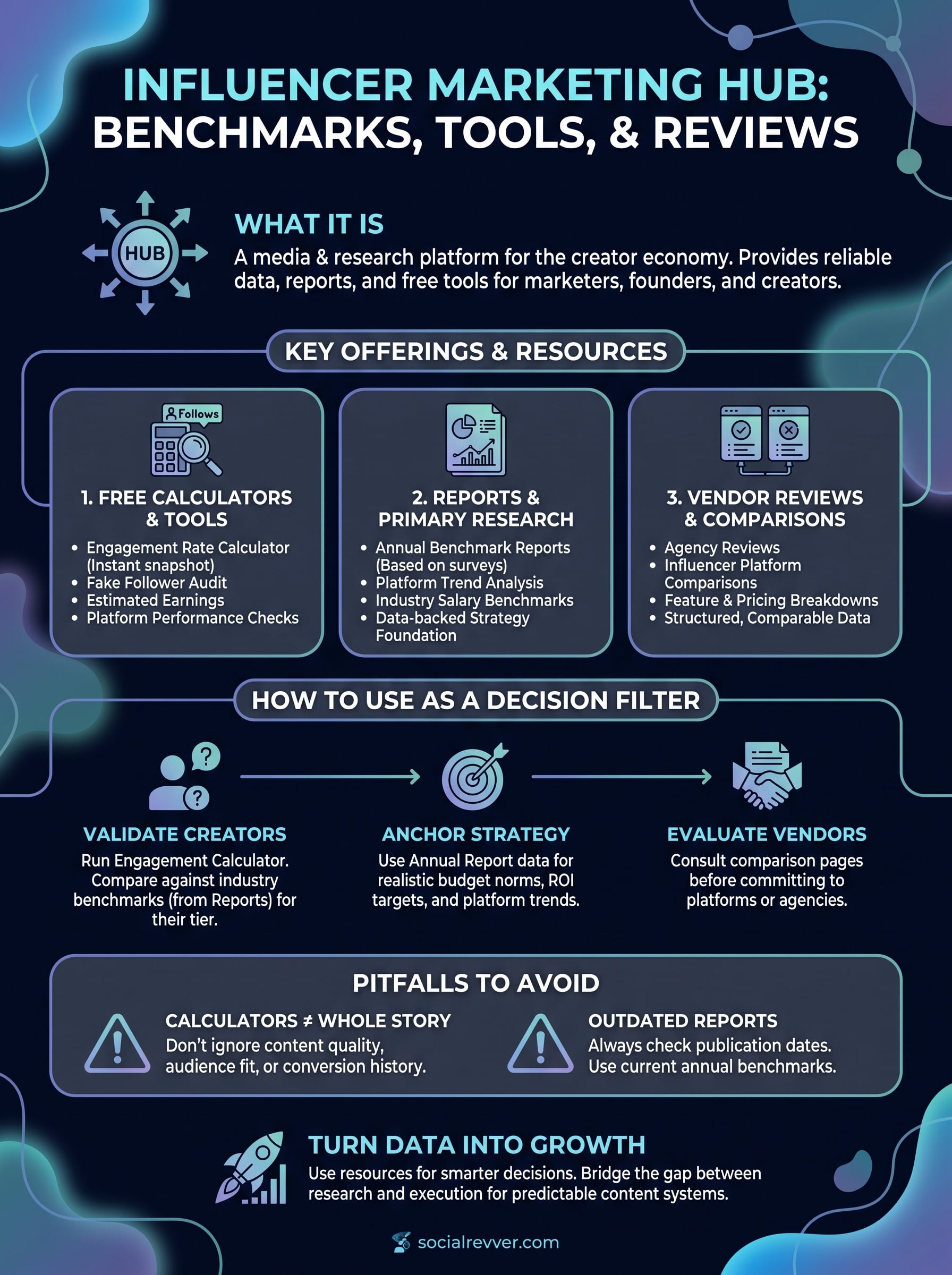
Influencer Marketing Hub is a media and research platform founded in 2016 that tracks, analyzes, and reports on the influencer marketing industry. It operates as an independent publisher, covering everything from platform algorithm changes to creator economy salary benchmarks. The site publishes original research, runs detailed comparison reviews of marketing tools and agencies, and maintains a library of free calculators that anyone can use without a subscription or login.
A Media Company Built Around Creator Economy Data
The platform covers a wide range of topics: influencer campaigns, social media platform updates, agency reviews, benchmark reports, and marketing technology comparisons. If you're trying to figure out what a competitive engagement rate looks like on TikTok right now, or which influencer platforms are worth paying for, this is one of the first places industry professionals check.
The site functions less like a blog and more like a reference library, updated continuously to reflect what's actually happening in the market.
Its free tools are the section most people discover first. The engagement rate calculator is the most widely used, letting you enter a creator's handle and get an instant snapshot of how their audience actually responds to their content, not just raw follower counts. Beyond that, the influencer marketing hub toolset includes resources for fake follower audits, estimated earnings calculators, and platform-specific performance checks across the major social channels.
Who Produces the Content
The site employs a dedicated editorial and research team, not a rotating pool of freelancers writing generic summaries. Their annual State of Influencer Marketing Benchmark Report draws from surveys of thousands of marketers and brand professionals across the globe. This gives the data real weight when you're building a strategy, setting campaign budgets, or benchmarking your own content performance against industry norms. You're working with primary research, not recycled opinion.
Why people use Influencer Marketing Hub
Most marketers and founders land on Influencer Marketing Hub because they need a fast, credible answer to a specific question. Is this creator's engagement rate actually good? How much should a mid-tier TikTok campaign cost? Which agency is worth the retainer? The platform exists to answer those questions with data instead of guesswork, which is exactly why it's become a default reference point across the industry.
Benchmarking Performance Against Real Numbers
The biggest pull for most users is the ability to set realistic performance benchmarks based on actual industry research rather than assumptions. When you're evaluating a creator for a campaign or measuring your own content's effectiveness, you need a reference point that reflects real market conditions. The platform's annual benchmark reports give you that grounding.
Knowing the industry average engagement rate for your platform and niche changes how you evaluate creators, content, and campaign outcomes.
Cutting Through Vendor Noise Before Making a Decision
Agencies, influencer platforms, and marketing tools all claim to be the best option for your budget. The influencer marketing hub publishes structured comparison reviews that break down pricing, features, and limitations across competing tools and services. This lets you walk into any vendor conversation with a clearer view of what the market actually offers and what a fair deal looks like, which keeps you from overpaying for something average.
How to find the official site and key sections
The official site is influencermarketinghub.com, and that's the only domain you need to bookmark. Search results will often surface it quickly, but watch for lookalike content sites that rank for related terms without offering the same depth of original research the platform is known for. Once you land on the right site, the top navigation organizes everything into clear, functional categories that make it straightforward to find what you need without digging.
Saving the direct URL cuts out the extra search step every time you need to pull reliable benchmark data on short notice.
The sections worth bookmarking
The Tools section is where most users should start. It contains the engagement rate calculator, fake follower checker, and earnings estimators, all available without creating an account or entering payment information. The Reports and Research section matters just as much, giving you access to annual benchmark studies and platform-specific trend analyses that back up strategic decisions with primary data rather than opinion.
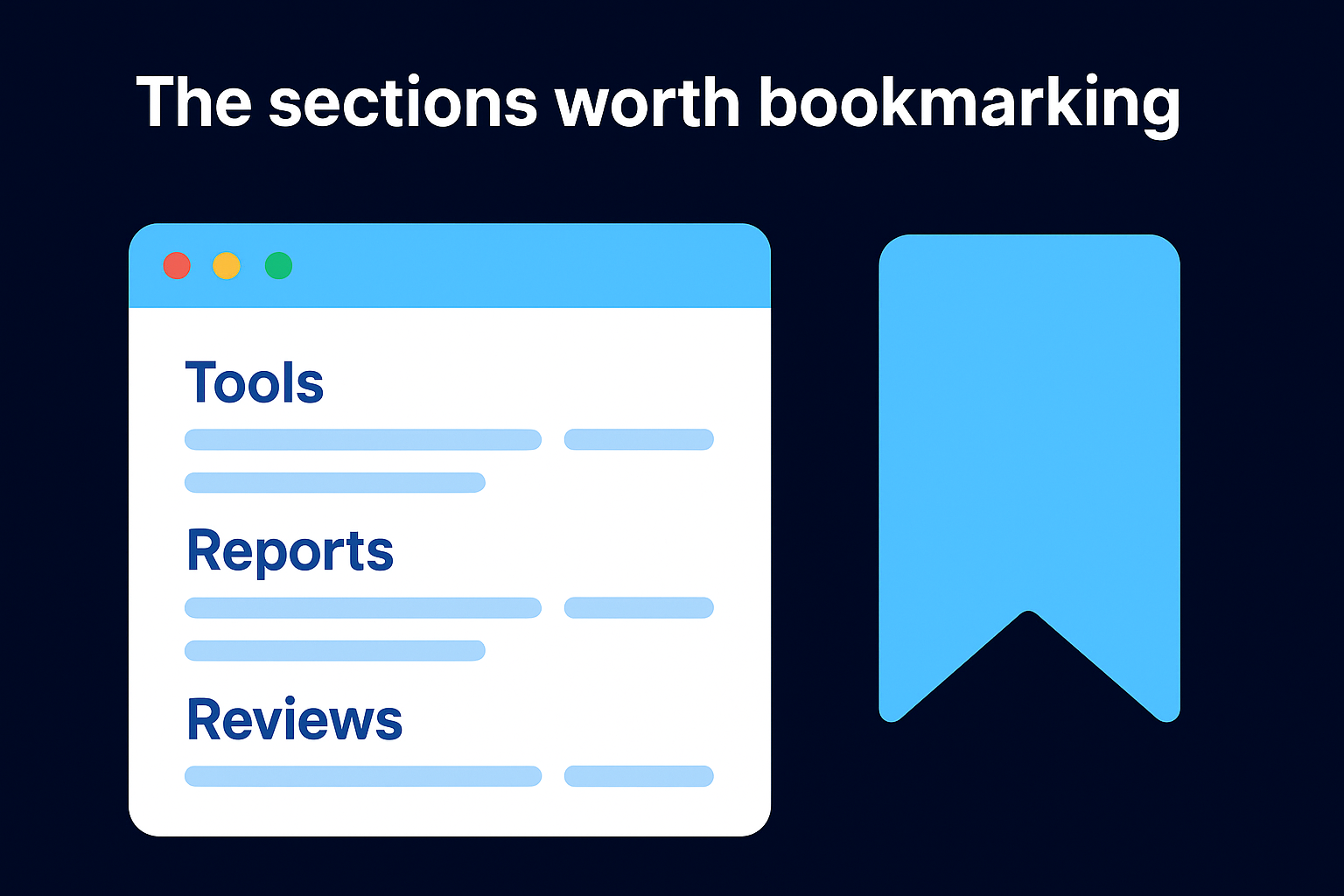
Your best resource for evaluating vendors is the Reviews section, which covers influencer platforms and agencies in structured, comparable formats. When you're deciding whether a specific platform fits your workflow, the influencer marketing hub comparison pages break down pricing tiers, feature sets, and limitations side by side, saving you from scheduling demos just to discover a tool doesn't meet your basic requirements.
How to use its tools and data for decisions
The tools on influencer marketing hub work best when you treat them as decision filters, not just curiosity tools. Before you commit budget to a creator, a campaign structure, or a new platform, run the numbers through the available calculators to validate your assumptions with real data rather than gut instinct. That single habit separates brands that scale efficiently from ones that burn spend on the wrong partnerships.
Validate creator selection before you commit
Start with the engagement rate calculator before you agree to any paid partnership. Plug in the creator's handle across platforms and compare the output against the benchmark reports in the research section. If their engagement rate falls below the industry average for their follower tier, that's a signal the audience isn't responding, regardless of how strong the follower count looks on paper.

A high follower count with weak engagement is a warning sign that the audience isn't actually buying what the creator is selling.
Use annual report data to anchor your strategy
Pull the annual benchmark report at the start of each planning cycle and use it to set realistic performance targets. The data covers budget norms, platform trends, and ROI benchmarks by channel, which gives your strategy a factual foundation instead of last year's assumptions. Sharing specific data points with your team also shortens internal alignment conversations, since everyone references the same industry-standard numbers rather than debating whose estimate is more accurate.
Common questions and pitfalls to avoid
Most confusion around influencer marketing hub comes from treating it as a single-purpose tool rather than a layered research platform. A few recurring mistakes show up often enough to be worth calling out directly before you build any workflows around the site.
Assuming the calculators tell the whole story
The engagement rate calculator gives you a useful snapshot, but it doesn't capture content quality, audience demographics, or a creator's conversion history. Use it as a starting filter, not a final verdict. If a creator passes the engagement rate check, follow up by reviewing their actual content and cross-referencing the platform's written analysis alongside the numbers you pulled.
Raw calculator outputs give you a direction to investigate, not a decision you can act on alone.
Relying on older reports without checking the date
The platform updates its benchmark reports annually, but older versions of those reports continue to circulate through secondary sources and blog roundups. Before you anchor a strategy to any specific statistic, verify the publication date directly on the original research page. Influencer marketing moves fast, and a benchmark from two or three years ago can push your strategy in the wrong direction if platform norms and audience behavior have shifted significantly since then. Pull the most recent version directly from the official site every time you start a new planning cycle.
Where to go from here
Influencer Marketing Hub gives you the benchmarks, free tools, and primary research to make smarter decisions about creators, platforms, and campaigns. The practical next step is building a consistent workflow around those resources: run the engagement calculator before every creator conversation, pull the annual benchmark report at the start of each planning cycle, and review the comparison pages before you commit budget to any new platform or agency.
Data without execution stays theoretical. If you're a founder or business owner who wants to turn that strategic knowledge into a predictable content system, the gap usually sits in production and distribution, not in research. SocialRevver builds managed short-form content systems that close exactly that gap, converting organic social attention into inbound leads and revenue on a consistent, measurable basis. Apply to work with our team and get a free 40+ slide social media strategy built around your specific brand.